
Why it might be the best time to go
There’s a version of the South Pacific that lives in the imagination: hammered-gold light, water so clear it looks fake, the silence of a place far from everything. That version is real. We’ve been there.
What the imagination doesn’t always account for is the crowd standing between you and it.
Peak season in the South Pacific — roughly July through August, when school holidays align with the Northern Hemisphere summer — is beautiful, yes. It’s also when the overwater bungalows are booked months in advance; the beaches are at their busiest, and the rate of a premium villa can make even the most committed luxury traveler pause.
Shoulder season is different. And in the South Pacific specifically, it is not a compromise. It is, in many ways, the better choice.
What Shoulder Season Actually Feels Like
The South Pacific’s shoulder seasons fall in two windows: April through early June, and again September through November. Outside the peak of Northern Hemisphere summer, the crowds thin, the best properties open up, and these islands have a chance to breathe.
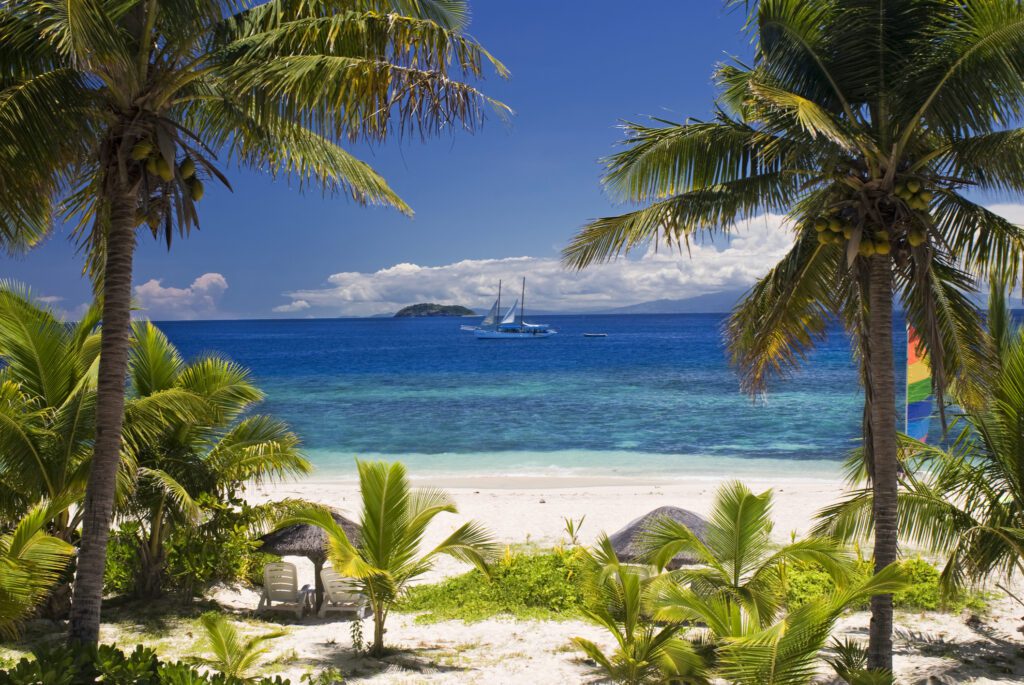
Picture Bora Bora in May. The lagoon is a shade of turquoise that no photograph has ever done justice to, and you are almost entirely alone with it. Or the Mamanuca Islands in Fiji in late April: the cyclone season has passed, the humidity has eased, and the reef is at its most vivid. The dive operators have space. The small, family-run resorts have time for you. The pace of everything slows in a way that feels like the point.
Shoulder season in the South Pacific isn’t about settling for something. It’s about arriving to a version of these islands that feels less like a production and more like the real thing.
Fiji: The Sweet Spot
Fiji’s shoulder seasons fall on either side of its mild winter. The trade winds are consistent; the ocean temperatures remain warm enough for comfortable snorkeling and diving, and the rainfall — while more frequent than the dry peak months — tends to arrive in short, dramatic bursts rather than prolonged grey days.
What you gain is significant. Fiji’s best small-island resorts, the ones with just a handful of bures, where the staff knows your name by the first morning, have availability. The coral gardens off the Mamanuca and Yasawa islands are in excellent condition. And the experience of eating a traditional lovo feast on a beach that is, for all practical purposes, yours, has a different quality when it isn’t shared with dozens of other guests.
We recommend shoulder season Fiji particularly for honeymooners who want genuine seclusion, families who want the full experience without the crowds, and divers who want to be in the water without jostling for visibility.
French Polynesia: Bora Bora, Moorea and Beyond
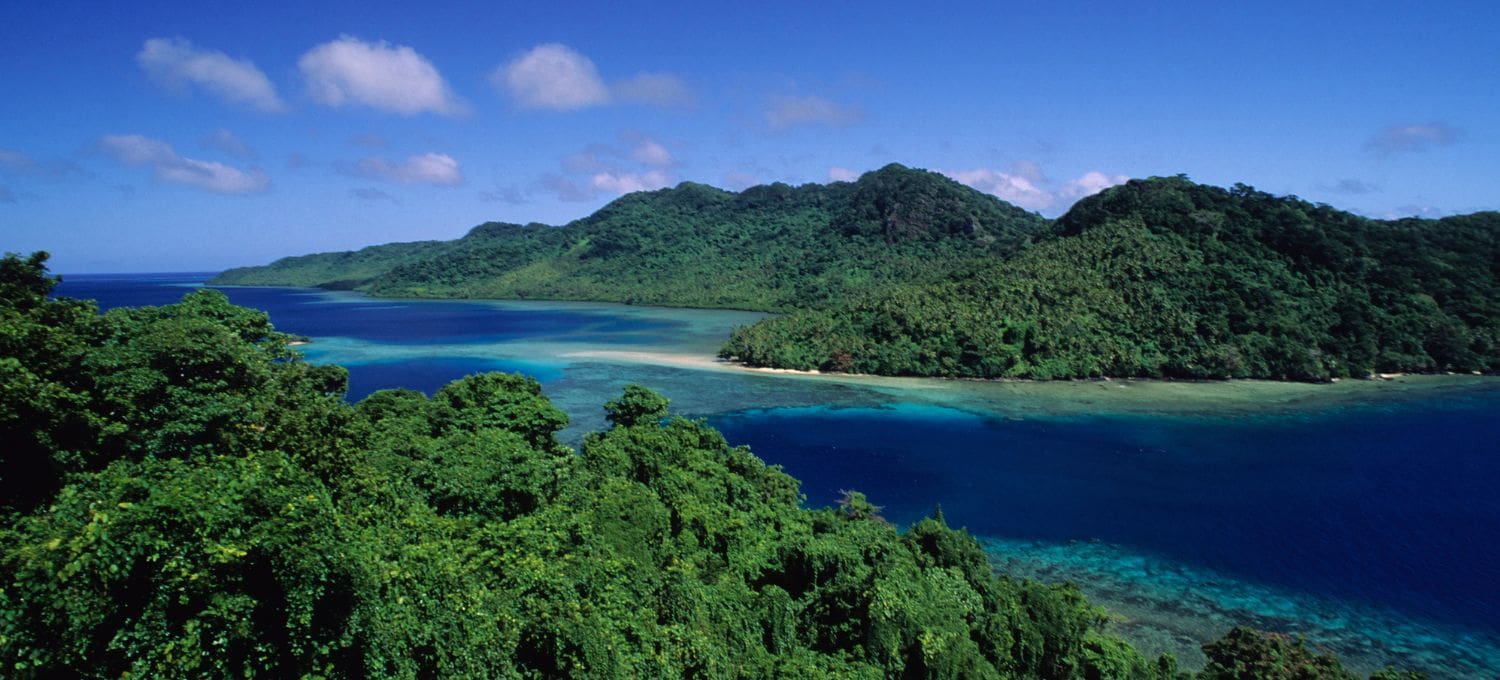
French Polynesia’s shoulder season runs roughly from April through June and again in October through November — bookending the cooler, drier austral winter. The light in May and early June is remarkable: softer than the high-altitude harshness of peak summer, warm and golden in the late afternoon in a way that makes the lagoons look like they’ve been lit by a photographer.
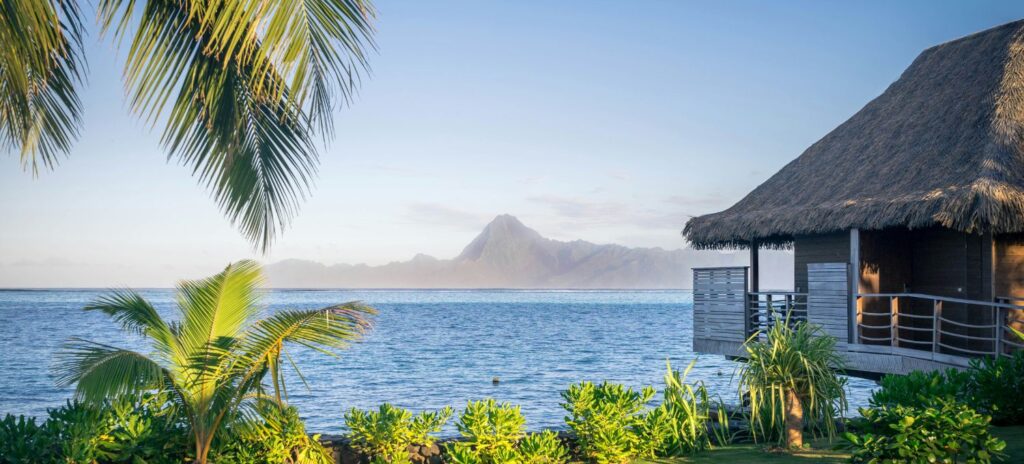
The overwater bungalows at the islands’ great properties (the Four Seasons Bora Bora, the InterContinental Thalasso, the St. Regis) are more available and more reasonably priced. The whale watching, which peaks between July and October as humpbacks migrate through the archipelago, begins in earnest in August but can be extraordinary from late September onward.
Beyond Bora Bora, shoulder season is the right time to explore further. Moorea, often overshadowed by its more famous neighbor, is lush and dramatic, with its volcanic peaks rising straight from the lagoon. The Tuamotu Archipelago, home to the extraordinary diving of Rangiroa and Fakarava, is at its best in the calmer shoulder months when visibility can stretch to 50 meters or more.
The Cook Islands: The South Pacific’s Best-Kept Secret
If Bora Bora is the South Pacific’s showpiece, the Cook Islands are its soul. A scattering of fifteen islands roughly halfway between Fiji and French Polynesia, they remain genuinely, beautifully under the radar. It’s a destination that draws travelers who’ve already done the famous islands and are looking for something that feels less packaged, more personal.
Rarotonga, the main island, is dramatic and green with a volcanic interior ringed by a lagoon of such clarity that you can count the fish from the surface. Aitutaki, an hour’s flight north, contains what many consider the most beautiful lagoon in the world: a vast, shallow expanse of crystalline water dotted with motu islands that feel untouched.
The Cook Islands’ shoulder season — April through June, and September through November — is when the island strips away any pretense of being a resort destination and simply is itself. Small guesthouses and boutique lodges. The same handful of restaurants. Long afternoons on empty beaches. A pace of life that, after a few days, begins to feel not slow but correct.

Planning It Right
Shoulder season travel in the South Pacific rewards a certain kind of planning. Not all properties operate at full capacity year-round; some of the smaller, more exceptional lodges close for a few weeks in the off-season, and flight connections from Los Angeles, New Zealand, and Australia can be less frequent than in peak months. Getting the timing right matters.
It also rewards flexibility. If you can travel in the first two weeks of May or the last two weeks of October, you’ll often find the sweet spot: the shoulder crowds have thinned, the conditions are excellent, and the properties are fully staffed and genuinely happy to have you.
We’ve done this enough times to know which weeks, which properties, which islands deliver the experience people are hoping for. That’s the kind of knowledge that makes the difference between a good trip and the one you’ll talk about for years.
Speak to a Catalina Quest specialist about designing your South Pacific shoulder season journey.
Contact Us