
If there’s one clear shift defining travel in 2026, it’s this: travelers are no longer chasing more. They’re seeking better. Better rest. Better connection. Better use of their time and energy. After years of packed itineraries and overstimulation, we’re seeing a return to travel that restores rather than exhaust—journeys designed with intention, balance, and a deeper sense of presence.
Here’s what’s defining travel in 2026 and why it matters.
More Time for R&R
The idea that a vacation must be “productive” is quietly disappearing. In its place? A renewed appreciation for rest.
In 2026, travelers are intentionally building trips around relaxing hotels and slower days—places where reading a book by the pool is just as valuable as a guided tour. Think beachside retreats, wellness-forward lodges, and boutique properties where the atmosphere invites you to exhale the moment you arrive.
This isn’t about doing nothing. It’s about permitting yourself to enjoy unstructured time: morning swims, long lunches, sunset walks, and afternoons with no agenda. We’re seeing travelers plan fewer hotel changes, stay longer in one place, and prioritize accommodations that feel like destinations in themselves.
Rest is no longer the reward at the end of a trip. It’s the foundation.

Multi-Day Biking & Hiking Tours Are on the Rise
While rest is essential, so is movement with purpose.
In 2026, multi-day biking and hiking tours are becoming one of the most sought-after ways to explore nature-rich destinations like Tasmania and New Zealand. These experiences appeal to travelers who want immersion without rush: days spent outdoors, nights in thoughtfully chosen lodges, and itineraries that unfold gradually rather than at full speed.
Tasmania’s rugged coastlines and alpine trails offer dramatic scenery and quiet roads ideal for cycling and trekking. New Zealand continues to set the standard with multi-day walks and bike routes that pair physical challenge with incredible hospitality.
What makes these journeys special is balance. You move your body, but you’re supported. Luggage transfers, well-paced routes, and curated accommodations allow travelers to stay present without worrying about logistics. It’s an adventure without chaos. It’s redefining active travel.
Decision Fatigue Is Real (And Travelers Want Support)
With endless information at our fingertips, planning travel has become more overwhelming—not less.
By 2026, travelers are openly naming what they’ve been feeling for years: decision fatigue. Too many hotel options. Too many routes. Too many reviews. Too many “must-dos.” The mental load of planning can drain excitement before a trip even begins.
This is where expert travel advisors are becoming essential again. Not as gatekeepers, but as trusted navigators. Travelers want someone who understands their priorities, filters out the noise, and makes confident, informed decisions on their behalf.
Instead of asking, “What can we do?” the question becomes, “What’s right for us?” With thoughtful guidance, planning becomes lighter, clearer, and far more enjoyable. In 2026, outsourcing decisions isn’t a luxury, it’s a form of self-care.
Getting Off Grid (But Not Giving Up Comfort)
Another defining trend for 2026 is the desire to truly disconnect without sacrificing quality.
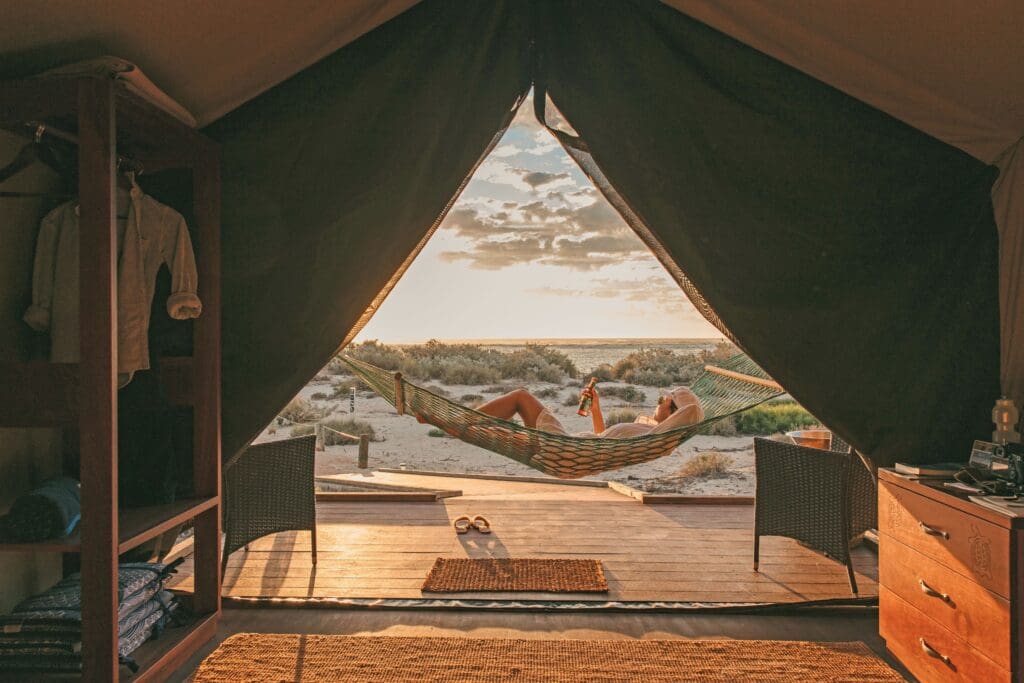
Off-grid stays are evolving beyond “rustic” into something far more refined. Properties like PurePods in New Zealand, Headwaters Eco Lodge in Tasmania, and Sal Salis in Western Australia are leading the way, offering immersive nature experiences paired with thoughtful design, comfort, and sustainability.
These are places where Wi-Fi fades into the background, and the natural world takes center stage. Floor-to-ceiling windows, solar power, minimal footprints, and deep respect for the surrounding environment allow travelers to reconnect—with nature, with their companions, and with themselves.
Getting off grid in 2026 isn’t about escaping modern life entirely. It’s about stepping away long enough to remember what matters.
Travel in 2026: Intentional by Design
Taken together, these trends point to a larger shift. Travel in 2026 is slower, more intentional, and deeply personal. It’s about creating space to rest, to move, to disconnect, and to let someone else handle the details.
We see this not as a trend, but as a return to what travel has always meant to do: reconnect us with the world and the people we share it with.
Contact Us