
Here’s What I Can’t Stop Thinking About.
I work in travel. I spend my days writing about destinations, building itineraries, and making the case for why certain trips are worth your time and money. You’d think that would make travel feel routine; that familiarity would dull the edge of it.
France just reminded me it doesn’t.
I came home from Normandy and Paris with a full notebook, an ambitious amount of cheese I had no business carrying on, and a few experiences I genuinely haven’t stopped talking about. Here’s what stood out.
Bayeux: The Perfect Base You Didn’t Know You Needed
Before we get to the beaches, let’s talk about Bayeux, because it deserves more than a footnote.
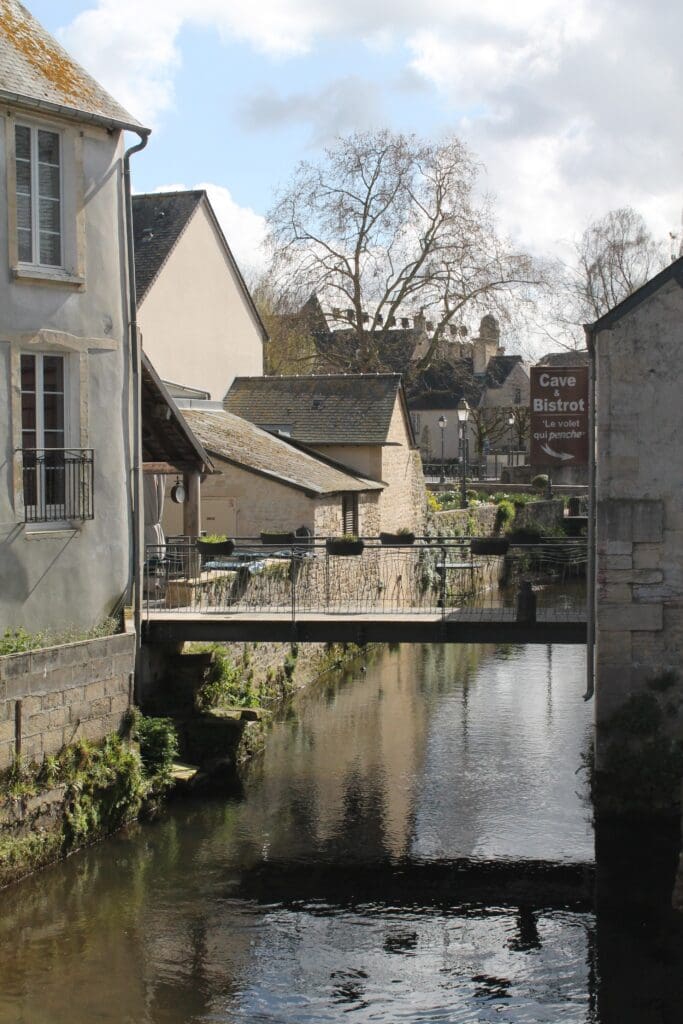
Most visitors to Normandy base themselves in larger towns or take day trips to visit the region. Staying in Bayeux changes the experience entirely. It’s a medieval market town that somehow survived World War II virtually intact (the first French town liberated by the Allies), and it carries that history quietly, without theatrics. Cobblestone streets, half-timbered buildings, and the 11th-century cathedral rising above the rooftops. It looks exactly like you hope Normandy will look.
The Bayeux Tapestry is here, and it’s genuinely worth a couple of hours. The actual textile is nearly 70 meters long, stitched in the 11th century, and depicts the Norman conquest of England with a detail and narrative momentum that still feels remarkable over nine centuries later.
But where Bayeux really earns it is in the evening. After a day at the beaches and the cemetery, you come back to a town that’s quiet and human-scaled — a glass of Calvados at a sidewalk café, a proper Norman dinner (duck, cream sauces, hard cider), and the ability to process the weight of the day at a pace that suits it. I can’t imagine doing Normandy without basing yourself here.
The Beaches: Where History Becomes Something You Feel
I’ve read about D-Day. I’ve watched the films. I thought I had a reasonable sense of what to expect walking onto Omaha Beach at Colleville-sur-Mer.
I didn’t.
There’s something about being physically present on that stretch of sand that no documentary fully prepares you for. When your guide points to the waterline — this is where they came ashore — the history stops being something you know and becomes something you feel. The German bunkers are still embedded in the cliffs above. The terrain these men had to cross is right there in front of you. It’s heavy in a way that stays with you long after you leave.
We also walked through several of the original German fortifications along the bluffs, where you encounter gun emplacements, observation posts, and tunnels that you can still enter. Standing inside a bunker that once looked down on the waterline puts you inside the other perspective in a way that’s disquieting and essential. It completes the picture.
A private guide makes all the difference here. Ours walked us through the tactical picture — the tides, the defenses, the geography of why Omaha was so catastrophically costly — in a way that made the whole experience legible rather than overwhelming. I can’t recommend this strongly enough: do not show up without a guide. The context is everything.
From the beach, we drove up to the American Cemetery, which contains over nine thousand graves, row after row of white marble crosses and Stars of David, on the bluff above the Atlantic, glittering behind them. The scale of it is something I wasn’t prepared for. The place is very quiet, and you find yourself moving slowly without deciding to, as if it simply demands it. I stood there longer than I expected to. I think most people do.
Paris: A Different Register Entirely
After the weight of Normandy, Paris felt like stepping into a different world — louder, faster, more dazzling. The train from Bayeux deposits you at Saint-Lazare and suddenly there’s traffic and café noise and fashion and the city doing what Paris does best: demanding your full attention.
Here’s the thing about Paris I always forget until I’m back: it rewards slowing down just as much as it rewards ambition.
Vivaldi at Sainte-Chapelle
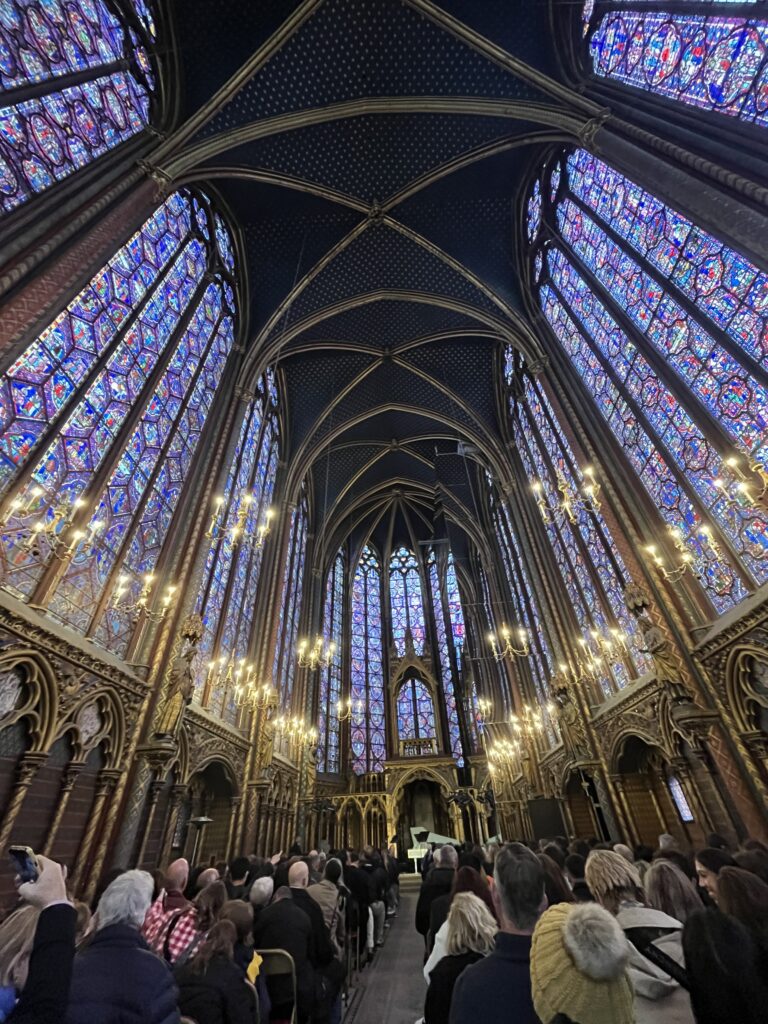
I’d been to Sainte-Chapelle before, but never at night for a concert. An evening of Vivaldi — The Four Seasons — performed by a small chamber orchestra inside that chapel is something I’ll be recommending to anyone who’ll listen.
The stained glass alone justifies a visit in daylight. At night, lit from within, with a live string quartet playing underneath those windows? It’s the kind of evening that makes you put your phone away and just be there. One of the best two hours I had on the entire trip.
Book in advance. These sell out.
The Museums, With Purpose
I spent a morning at the Musée d’Orsay with a private guide, and it became one of my favorite museum experiences in a city full of them. Instead of shuffling through crowds trying to locate the Monets, we moved with purpose — context, stories, the details that make Impressionist painting actually make sense rather than blur together. My guide pointed out things in paintings I’d seen a hundred times without noticing. Two hours felt like twenty minutes.

I also spent an afternoon at the Musée Rodin, and it might be the most quietly perfect museum experience in Paris. The sculptures are extraordinary on their own terms — The Thinker, The Kiss, The Gates of Hell — but what sets it apart is the garden. Rodin’s work installed outdoors, among the roses and gravel paths, in the kind of afternoon light Paris does better than anywhere. You wander, you sit, you look. No crowds pressing you forward. It’s one of those rare places in the city where the pace slows down, and you let it.
The Louvre, as always, is on its own terms. Worth it, but go with a plan and low expectations for moving quickly through any of it.
The Food
I could write a separate post entirely about eating in Paris. The short version:
Frenchie, the wine bar on Rue du Nil — small, buzzy, shareable plates, a great natural wine list. Book well ahead.
Bistro des Livres on the Left Bank — book-lined, cozy, the kind of place a local would take you. I went for the atmosphere and stayed for the chocolate mousse, which was served from an antique porcelain tureen with extra spoons. Dense, intensely chocolatey, no garnish needed. I still think about it.
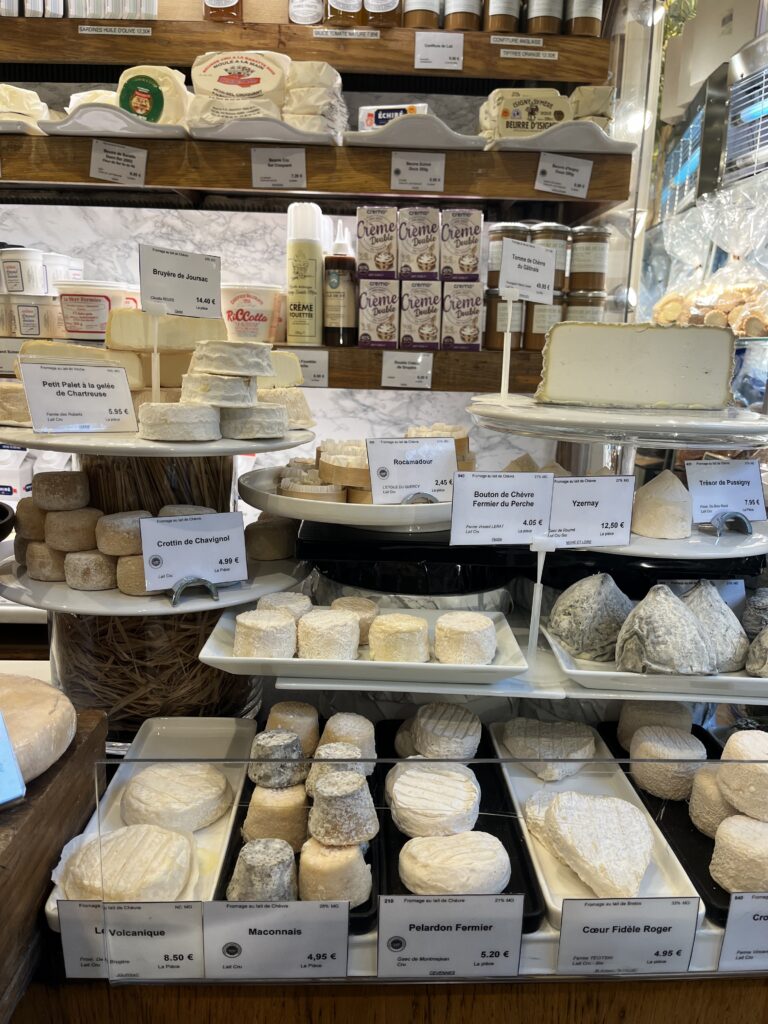
Barthélémy on Rue de Grenelle — a fromagerie I’ll never forget the smell of. The staff guided me through the counter like sommeliers. I left with more cheese than was wise and absolutely no regrets. (It survived the flight. Barely.)
The Wandering
Some of my best hours in Paris had no agenda at all. Coffee at a sidewalk café watching the morning arrive. A wrong turn that led to a courtyard I never would have found with a map. The Seine at dusk. That particular quality of Parisian afternoon light that makes everything look slightly better than it should.
You can’t schedule that. But you can build space for it — and it’s one of the things a well-designed itinerary quietly makes room for.
Want to Do France Right?
This is the kind of trip that looks straightforward on paper but gets significantly better with the right details in place: a private guide on the beaches, the right base in Bayeux, concert tickets at Sainte-Chapelle locked in before you fly, a reservation at Frenchie, knowing which fromagerie to walk into on a Tuesday morning.
That’s exactly what the team at Catalina Quest does. We handle the details, the sequencing, the things that turn a good trip into the one you talk about for years.
Contact Us